GAZES
What we see, and what looks back at us.
Looking at a work of art is never a neutral gesture.
It is a way of standing in front of the world — at a distance, or very close.
Before a painting, each viewer arrives with what they are: their history, their attention, their silence of the day.
There is no single way of seeing, only a plurality of gazes.
The distant gaze
Some look first from afar.
They stop a few steps back, as one might contemplate a landscape before entering it.
Their gaze takes in the whole: the composition, the balance of forms, the overall structure of the painting.
They perceive the work as a quiet architecture.
Lines respond to one another, colors find their place, space breathes or tightens.
If a human figure is present, it becomes one form among others, inscribed within a larger order.
This gaze seeks coherence.
It thinks before it feels.
It reads the painting as something that stands, held together by an inner logic.
The gaze that draws closer
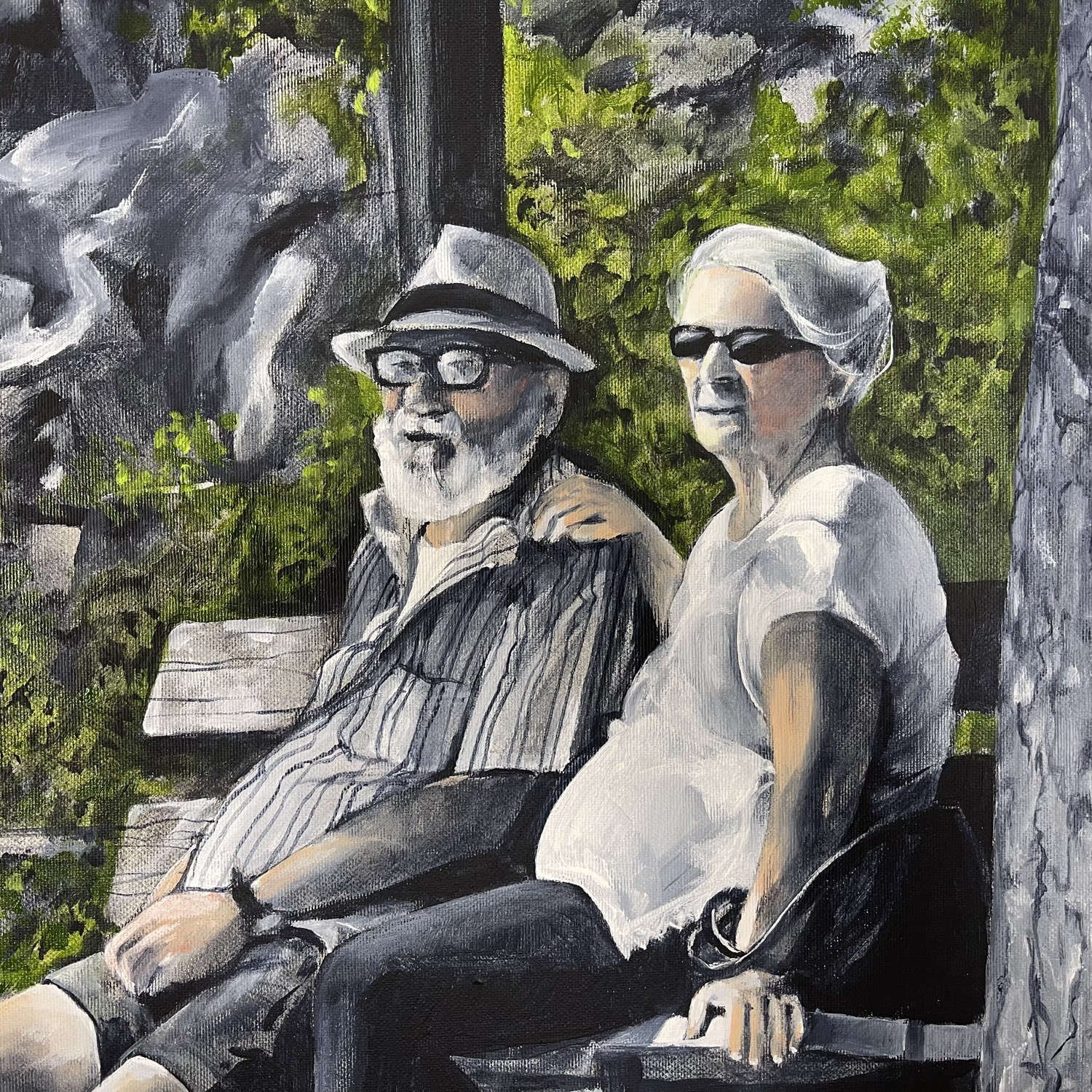
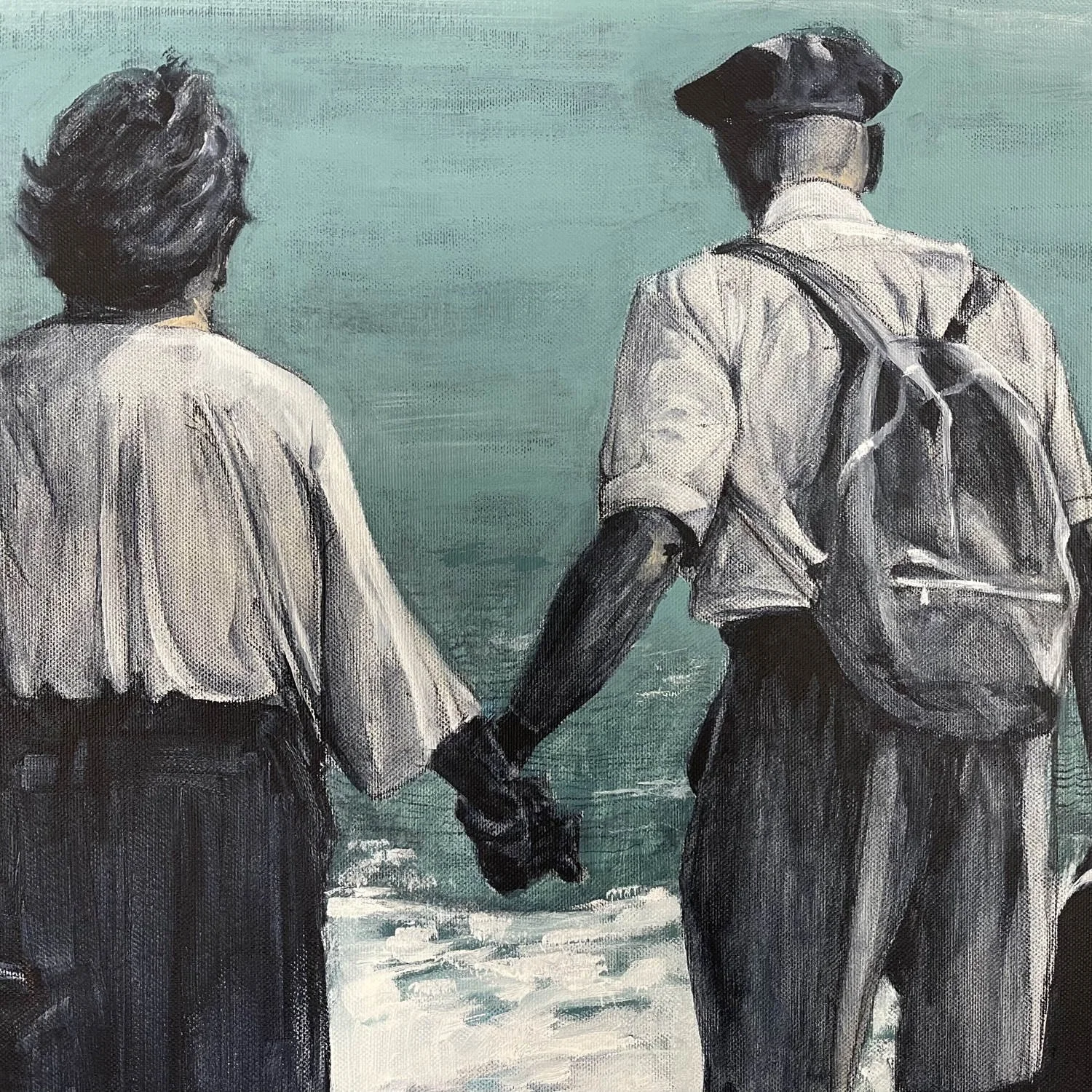
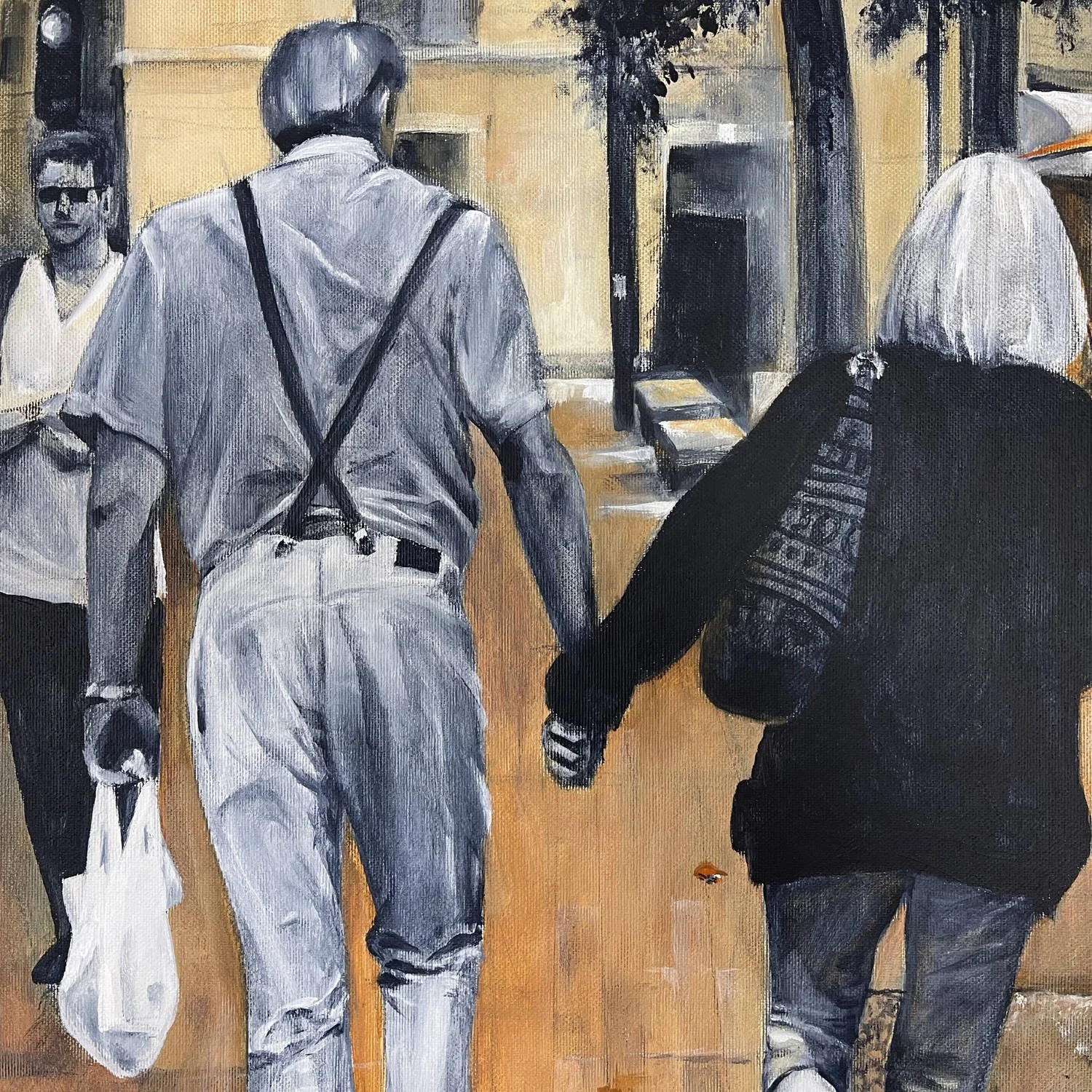
Others move forward.
Almost instinctively.
They are not drawn to the whole, but to what resists.
A detail calls them:
a hand barely defined,
a posture that hesitates,
a passage left deliberately unresolved.
For them, the detail is not secondary.
It is an entrance.
Through it, the painting ceases to be an image and becomes an intimate experience.
They question the work as one would question an old memory.
Something resonates, without always knowing why.
The gaze without method
There are also those who do not know how they look.
They analyze neither composition nor detail.
Their gaze wanders, pauses, returns.
They are not trying to understand.
They remain.
This gaze is often the most accurate, because it demands nothing.
It allows the work to come forward, at its own pace.
Without expectation.
Without vocabulary.
When the gaze reverses
At times, a shift occurs.
After looking for a while, something changes direction.
It is no longer you who observes the work.
It is the work that holds you.
A posture, a silence, a presence reaches you without passing through reasoning.
The painting does not tell a story:
it awakens a sensation, a buried familiarity.
At that moment, looking becomes encounter.
What the work allows
A work of art never imposes a point of view.
It offers depth.
One is free to remain at the surface,
to explore its structure,
or to lose oneself in an almost invisible detail.
Perhaps this is the true strength of figurative painting:
to offer a space where gazes do not resemble one another,
where the visible is never exhausted,
and where looking already reveals something of ourselves.
A work of art does not ask to be understood,
only to be looked at — differently, each time.
Some paintings seem to have been made for this.
Not to be seen quickly, but to accompany a gaze that returns.
They do not impose themselves.
They endure.